
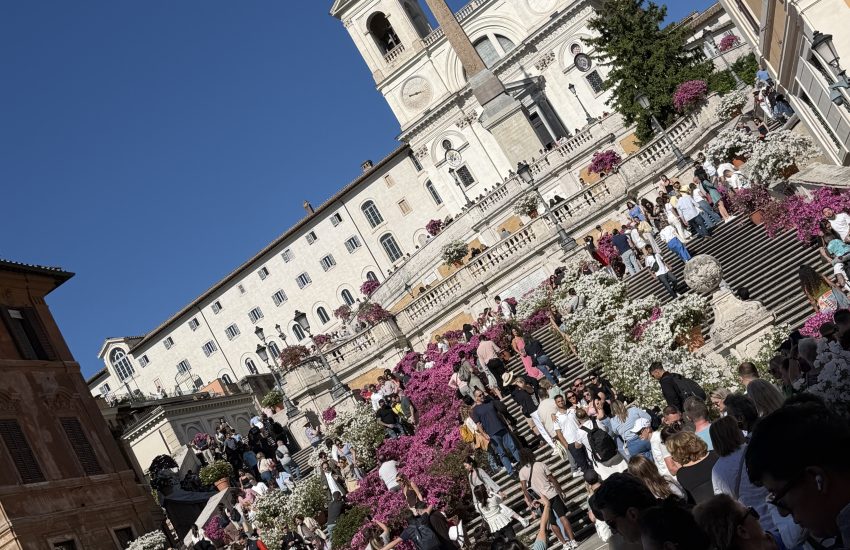
There is a version of Piazza di Spagna that most people never see — and it is the one worth remembering. Not the afternoon one, dense with selfie sticks and gelato cups, but the one that surfaces late, when the city finally exhales and the steps glow soft under the lamplight. That is when the square becomes what it always was meant to be: a stage without a performance, beautiful simply by existing.
By day, the spectacle is undeniable. The Scalinata di Trinità dei Monti draped in azaleas — clouds of fuchsia and white cascading down 135 steps — is one of those views that earns its reputation without apology. The church above, the obelisk cutting the sky, the crowd below moving like a slow tide. It is overwhelming, yes, but also genuinely extraordinary.
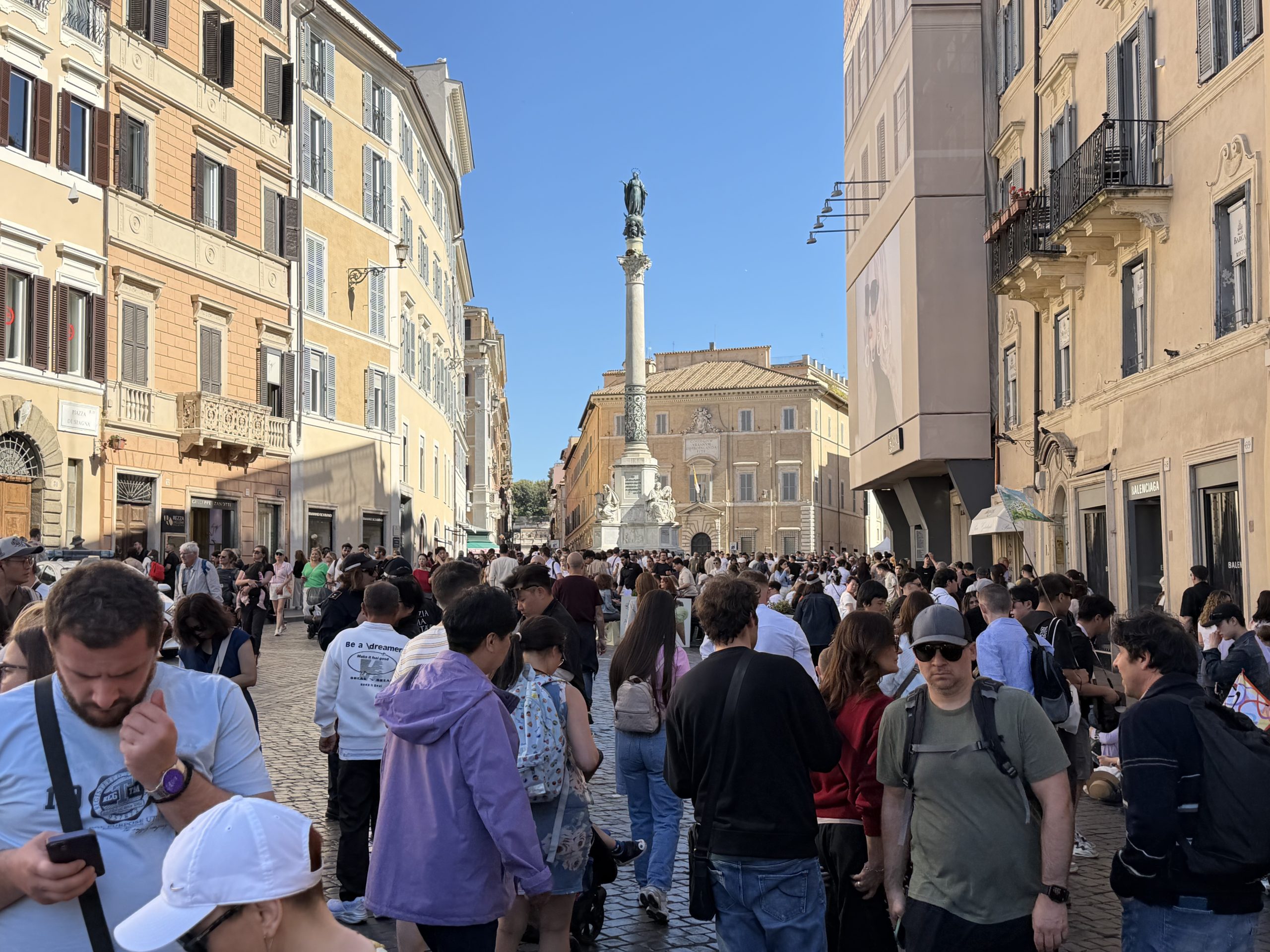
Return after midnight, though, and you will find something rarer: silence with a pulse. The Barcaccia fountain murmurs at the base of the steps, a few figures linger without agenda, and Via Condotti — impossibly glamorous by day — stretches quiet and golden into the distance. Rome, for a moment, belongs only to those who stayed.
Of all the great piazze, this one rewards patience most. Come for the flowers, the crowds, the energy of a city on full display. But come back at night — that is when Piazza di Spagna finally whispers its real name.
